Wildfire Smoke, Filters and the Furnace Fan
For wildfire smoke, a furnace filter rated MERV 13, or the highest your system can take, plus the fan set to On and outdoor air shut off, cleans the whole house. Add a portable cleaner in the bedroom and switch the swamp cooler off.
By the editors of Heating & Cooling the Front Range · Sources checked
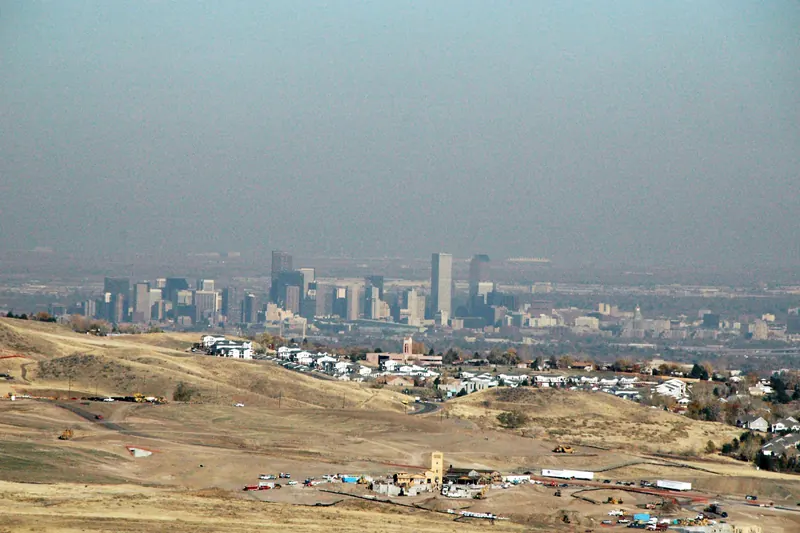
Some summers it arrives without warning. The mountains vanish by mid-morning, the sun turns a dull copper, and by afternoon the skyline from Sloan's Lake looks like a photograph left in a drawer for decades. The fires might be one ridge over or several states away. Either way the smoke settles into the Front Range basin, and some of it settles into your living room.
The good news is that most Denver-area houses already own the most useful tool for this: a forced-air furnace with a blower and a filter slot. Fitted with the right filter and run the right way, that system becomes a whole-house air cleaner. A portable unit in the room where people sleep does the rest.
What follows is the order of operations, drawn mostly from the Environmental Protection Agency's wildfire guidance: what to put in the filter slot, how to set the fan, what to do about outdoor air, and why the box on the roof is the one appliance to switch off.
Part 1How does smoke get into a closed house?
Smoke is a mix of gases and fine particles, and EPA's wildfire indoor air page says the particles are the biggest health threat. They are small enough to drift indoors three ways: through open windows and doors, through fans and heating or cooling systems that pull in outdoor air, and through the gaps around closed windows, doors and framing, a process called infiltration.
That third route is why shutting the windows helps but does not finish the job. An old brick bungalow and a newer suburban two-story both leak to some degree, more so on a windy day. Whatever gets in has to be caught by a filter, or it stays in the air you breathe.
Part 2What MERV 13 means, and whether your furnace can take it
MERV stands for Minimum Efficiency Reporting Value. EPA's explainer on MERV ratings says the scale runs from 1 to 16 and describes how well a filter traps particles between 0.3 and 10 microns; the higher the number, the better the capture. For smoke, EPA suggests MERV 13, or as high a rating as your system fan and filter slot can accommodate.
That second clause matters. A denser filter is harder for the blower to push air through, and not every furnace or air handler is built for it. EPA says plainly that you may need to consult a professional HVAC technician to find the highest rating your system can handle. If your contractor is in for a spring or fall check, it is a good question to ask before smoke season, not during it.
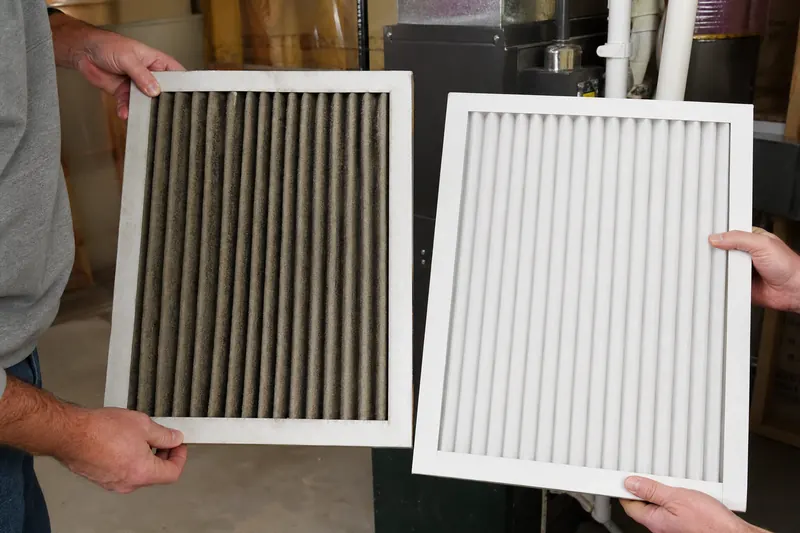
Whatever rating you settle on, fit counts as much as the number. EPA says the filter should sit snugly so air cannot leak around it, and that it should never be bent or crushed to fit. A gap along one edge lets smoky air bypass the media entirely.
Air Quality Index bands
AQI upper limit
Part 3Set the fan to On and keep outdoor air out
A filter only cleans air that moves through it. On most thermostats the fan sits on Auto, which means the blower only runs while the furnace or air conditioner is heating or cooling. On a mild smoky day that might be rarely. EPA's advice is to run the system's fan as often as possible, setting it to On instead of Auto while the air quality is poor, so the house air passes through the filter again and again.
The second step is shutting off outdoor air. If your system has a fresh-air intake, EPA says to set it to recirculate or close the outdoor intake damper. Many older Denver systems have no such intake, but newer suburban houses sometimes do, and it is worth knowing where yours is before you need it. Window air conditioners have their own small outdoor damper; EPA says to close it, and if it cannot be closed, not to run that unit in smoke. Keep windows and doors closed.
A thermostat with a simple fan switch is all this takes. If yours buries the setting in a menu, practice finding it on a clear day; our piece on thermostats and chinook days covers the controls in more detail.
Part 4Portable air cleaners and the box-fan version
A furnace filter cleans the whole house slowly. A portable air cleaner cleans one room quickly. EPA's advice is to place it where people spend the most time, usually a bedroom, run it as often as possible on the highest fan speed, and make sure the unit does not produce ozone.
If no commercial unit is available, EPA's researchers describe a homemade version: one or more furnace filters strapped or taped to a box fan. Their research on DIY air cleaners says to use MERV 13 filters, and found the devices almost useless once the filters were dirty. The fan matters too.
Box-fan air cleaners
Use a box fan made in 2012 or later that carries a UL or ETL safety mark; EPA says older fans carry known fire risks and should not run unattended or while people sleep. Do not leave children alone with the fan running. Turn it off when nobody is in the room, and replace the filter when it looks dirty.
Part 5The swamp cooler is the one to switch off
Evaporative coolers are built to do the opposite of everything above. They pull a steady stream of outdoor air through wet pads and push it through the house, and they only work with windows open for that air to escape. On a smoky day, that means pumping smoke inside. Our advice is simple: shut the cooler down, or at most give it short, occasional runs, and close up the house.
EPA allows one exception. If the cooler can be reached safely, its outside air intakes can be completely covered with 4-inch-thick MERV 13 furnace filters; EPA warns that wind and rain chew through filters mounted outside, so expect to swap them often. Only with every intake covered that way does it make sense to keep the cooler running. For a roof unit that means ladder trips, with the power shut off and locked out at the disconnect first, someone holding the ladder and nobody on a wet or windy roof. If any of that sounds doubtful, leave the cooler off.
To stay cool meanwhile, EPA suggests fans or a window air conditioner with its outdoor damper closed. Our swamp cooler or central air comparison looks at whether smoke weeks are reason enough to add central air, and our cooler start-up and shutdown guide covers safe roof work.
Part 6One clean room, and fewer indoor sources
If the whole house can't be kept clear, concentrate on one room. EPA suggests setting up a clean room, usually a bedroom, with the windows shut and a portable air cleaner running, so there is at least one place to sleep and rest in cleaner air.
It also helps to stop making particles indoors. EPA's list of things to avoid during smoke includes smoking and vaping, burning candles or incense, spraying aerosols, frying or broiling food, and vacuuming unless the vacuum has a HEPA filter. None of these feel like much on an ordinary day; on a smoky one they add to a load the filters are already struggling with.
Part 7Changing filters during and after a smoke spell
Smoke loads a filter quickly. EPA says to keep extra filters on hand during heavy smoke and plan to change them more often than the maker recommends; if a used filter comes out heavily soiled, change the next one sooner. Our standing rule for the rest of the year is to check monthly and replace when dirty or on the maker's schedule.
When the air clears, even briefly, EPA suggests opening windows or the system's fresh-air intake to air the house out. Check AirNow before you do: the AQI runs from Good at 0 to 50 up through Hazardous above 300, and values of 100 or below are generally considered satisfactory.
Smoke and ozone often arrive on the same hot summer days, but they behave differently. A MERV 13 filter catches smoke particles; ozone is a gas and slips through. Our guide to ozone days explains what to do about that.
Common questions
Will a MERV 13 filter strain an ordinary furnace blower?
It depends on the furnace, the blower and the filter slot, which is why EPA says you may need an HVAC technician to tell you the highest rating your system can accommodate. Ask at the next service visit rather than guessing during a smoke event.
Should the furnace fan stay on all night when it's smoky?
EPA suggests running the fan as often as possible, set to On rather than Auto, while air quality is poor and a high-efficiency filter is installed. That keeps house air passing through the filter even when the system isn't heating or cooling.
Do a swamp cooler's wet pads wash the smoke out of the air?
No. Wet pads cool the air but are not a smoke filter, and EPA says a cooler can bring more smoke inside. Leave it off, or use it only briefly, unless 4-inch MERV 13 filters fully cover every outside intake.
Does a HEPA furnace filter exist for a normal Denver furnace?
EPA's wildfire advice is framed around MERV ratings for furnace filters, with MERV 13 as the target where the system allows. Its wildfire page mentions HEPA only for vacuums, so ask your contractor what your particular system can take.
Is an ionizer or ozone air purifier useful during smoke season?
EPA says to make sure any portable air cleaner does not produce ozone, and it calls ozone generators generally ineffective at cleaning indoor air. Stick with a filter-based unit.
Sources
- EPA — Wildfires and Indoor Air Quality (IAQ) — how smoke enters, MERV 13, filter fit, fan On, recirculate, evaporative coolers, spares, airing out
- EPA — What is a MERV rating? — MERV scale and particle sizes, asking a technician
- EPA Air Research — DIY air cleaners for wildfire smoke — 2012-or-later fans, UL or ETL mark, supervision, dirty filters
- AirNow — AQI Basics — AQI categories and the satisfactory threshold
- EPA — Ozone Generators that are Sold as Air Cleaners — why ozone-making cleaners are a poor choice
- DOE Energy Saver — Evaporative Coolers — coolers bring in outdoor air and need open windows
- ENERGY STAR — Maintenance Checklist — checking filters monthly