Carbon Monoxide, Gas Furnaces and the Alarm Law
Colorado's carbon monoxide alarm law covers most Front Range houses: any home with gas heat, a fireplace or an attached garage. Put alarms within 15 feet of every bedroom door, service the furnace yearly, and if one sounds, get everyone out and call from outside.
By the editors of Heating & Cooling the Front Range · Sources checked
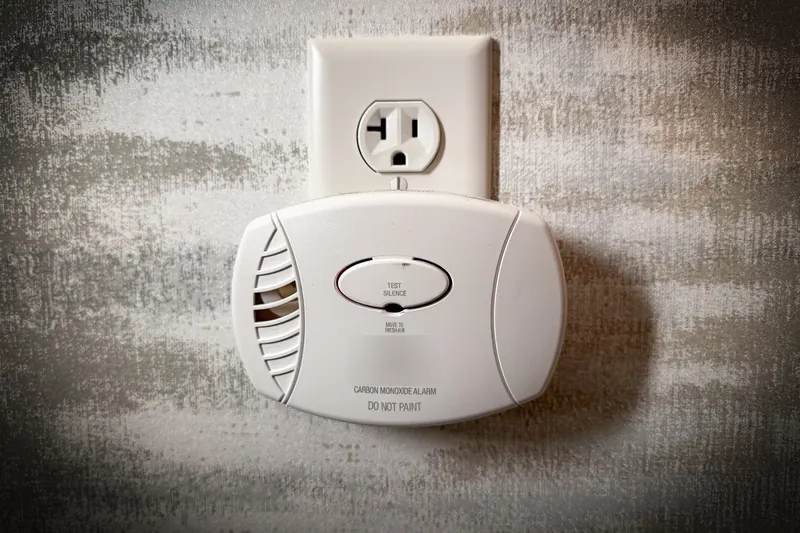
Most Front Range houses burn something to stay warm. The furnace in a 1990s Highlands Ranch basement, the boiler under a Capitol Hill foursquare, the water heater in the garage of a Lakewood ranch, the gas fireplace a previous owner added in the family room: each one makes carbon monoxide as part of normal combustion and depends on a vent to carry it outside. When that vent, the burner or the heat exchanger fails, the gas has no color and no smell, and it can fill a house while everyone sleeps.
Colorado has a law about it, and it applies to far more houses than most owners realize. This piece covers what the law asks, where alarms belong, what a furnace's annual service is for, and the one thing to do when an alarm goes off: leave, and make the call from outside.
If a CO alarm sounds or you smell gas
Leave the house at once and take everyone, pets included, outside; once outdoors and away from the house, call 911 or Xcel Energy (in a house on propane, 911 or the propane supplier). On the way out, do not touch light switches, the thermostat, a phone or the garage door opener, and do not go back in until responders say it is safe.
Part 1What does Colorado's carbon monoxide law require?
The state's alarm law, passed in 2009 as the Lofgren and Johnson Families Carbon Monoxide Safety Act, covers any dwelling that has a fuel-fired heater or appliance, a fireplace, or an attached garage. On the Front Range that describes nearly every house with a gas furnace, gas water heater or gas range, and plenty of all-electric houses too, because of the garage.
The act puts alarms in place at three moments. A seller of an existing single-family home offered for sale or transfer on or after July 1, 2009 must make sure one is installed. A rental unit with a change of tenant on or after the same date must comply; the landlord replaces missing alarms before a new tenancy, and the tenant keeps them working. And interior alterations, repairs, fuel-fired appliance replacements or additions that need a building permit also trigger the requirement, which matters to anyone replacing a furnace or water heater.
Placement is specific: within 15 feet of the entrance to each room lawfully used for sleeping, or wherever the local building code says. The act also makes it unlawful to remove an alarm's batteries or otherwise disable it, except for maintenance. These details come from the session law as enacted in 2009; later amendments may have added to it, so check the current statute or ask your city's building department if a sale or permit depends on the exact wording.
Part 2Why does a furnace replacement bring the alarm law into play?
Because the law ties alarms to permitted work. Replacing a gas furnace or water heater in Denver, Aurora or Lakewood requires a permit, and the act names fuel-fired appliance replacements that require a building permit among its triggers. In practice, the inspector who checks the new furnace may also look for compliant alarms near the bedrooms, and a contractor who knows the codes will bring that up at the bid stage.
That makes a replacement a good time to sort alarms out properly rather than leaving the single old unit in the hall. The permits and inspections feature covers who pulls the permit and what the inspection checks, and the guide to choosing a contractor covers what a good bid should include.
Part 3Where should alarms go in a Front Range house?
Start with the legal minimum, then go further. The U.S. Consumer Product Safety Commission recommends battery-operated or battery-backup alarms on every level of the home and outside sleeping areas, and says interconnected alarms are best, so that one sounding in the basement sets off the one by the bedrooms. The CDC's advice on carbon monoxide poisoning is to put detectors near every sleeping area and check their batteries when the clocks change each spring and fall.
House by house, that tends to mean something like this. In a two-story suburban house, one in the upstairs hall within 15 feet of each bedroom door, one on the main floor, and one in the basement where the furnace and water heater sit. In a 1950s ranch with a garage on the bedroom wing, one in the bedroom hall and one near the door from the garage. In an older Denver house with a basement bedroom, that bedroom needs coverage too. Follow the maker's instructions for mounting height and distance from appliances, and replace alarms when the maker says they have reached the end of their life.
The Department of Energy makes the same point from a different direction: its guide to ducts recommends a CO monitor for any home with a fuel-burning furnace, stove or other appliance, or an attached garage.
Part 4What does carbon monoxide poisoning feel like?
The CDC says the most common symptoms are headache, dizziness and weakness, and that they are often described as flu-like. CPSC's list adds nausea, vomiting, sleepiness and confusion. That overlap with ordinary winter illness is what makes CO dangerous: a household can blame a cold for days.
Because the symptoms are so ordinary, the alarm is the warning to trust, not how anyone feels; never wait for symptoms to confirm an alarm. CPSC's guidance is plain: if you suspect CO poisoning, get outside to fresh air immediately, and then call 911.
Part 5The annual furnace service, and what it is for
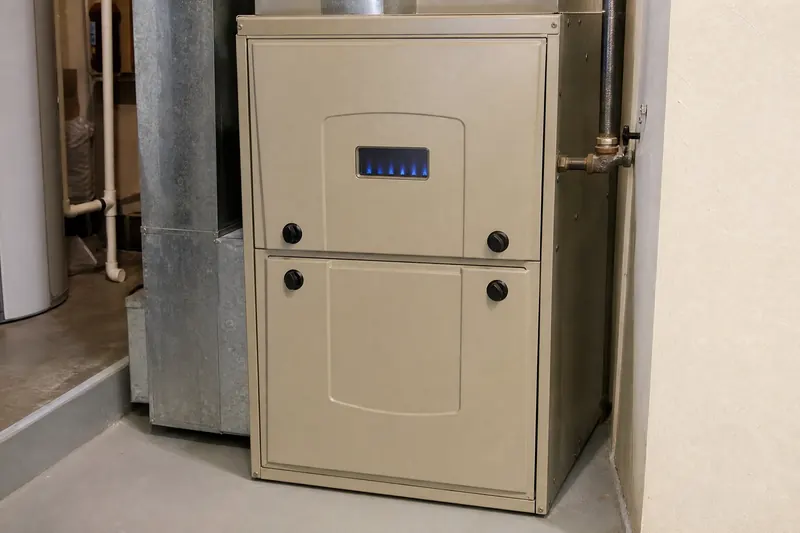
The single best defense is a furnace that is checked every year. The CDC recommends having the heating system, water heater and any other gas-, oil- or coal-burning appliances serviced by a qualified technician annually. The EPA's page on carbon monoxide and indoor air says to have a trained professional inspect, clean and tune the central heating system, including furnaces, flues and chimneys, every year.
ENERGY STAR's maintenance checklist says the heating system's check belongs in the fall, and that the contractor should check gas connections, gas pressure, burner combustion and the heat exchanger. Those are the parts that decide whether combustion gases stay in the vent. A cracked heat exchanger or a blocked flue is not something a homeowner can see from the basement stairs.
The Front Range season makes that yearly visit worth keeping. NOAA's 1991–2020 normals put Denver International Airport at 5,863 heating degree days a year, and a furnace here can cycle on through cold mornings well into spring. A small fault that develops in March can sit unnoticed until the first cold snap of the next fall, which is exactly when a tune-up should catch it.
What a homeowner can do is simple and safe. Change or check the filter on schedule; ENERGY STAR suggests looking at it monthly. Keep storage boxes, paint cans and laundry away from the furnace and water heater. Outside, ask the technician to show you where the furnace's vent and air intake pipes leave the house, and keep drifted snow and leaves clear of them. Everything else on a gas appliance, including the burners, gas valve, gas piping and the vent itself, is work for a licensed technician.
Part 6Gas smells, heat pumps and the leave-first rule
The same rule applies to a gas smell. Xcel Energy's Colorado new-mover guide says that if you notice a sudden odor and do not know where it is coming from, leave the building quickly. It says not to turn light switches or electric appliances on or off, not to use a garage door opener, and not to use your phone until you are outside and away from the odor. Then call Xcel or 911. Natural gas is odorized precisely so you will notice it; if you smell it, go.
People sometimes ask whether switching to a heat pump removes the CO risk. A heat pump burns nothing, so it makes no carbon monoxide itself. But a dual-fuel system keeps a gas furnace for backup, the water heater and range may still be gas, and the attached garage is still there, so the alarm law and the alarms still apply. The furnace or heat pump feature covers that choice, and the feature on ductless heat pumps for older houses covers houses heated by old boilers.
Common questions
Does Colorado's CO alarm law apply to an all-electric house?
It can. The act covers homes with a fuel-fired heater or appliance, a fireplace, or an attached garage, so an all-electric house with an attached garage is covered. A house with none of the three is outside the law, but an alarm is still cheap insurance.
Does the 15-foot rule mean one alarm for every bedroom?
Not necessarily. The act asks for an alarm within 15 feet of the entrance to each sleeping room, so one alarm in a hallway can cover several bedroom doors if each is within that distance. Measure from each door, and check whether your local building code sets its own placement.
Who is responsible for CO alarms in a Colorado rental?
Under the 2009 act, the landlord installs or replaces missing alarms before a new tenancy begins, and the tenant keeps them working and replaces batteries. Neither may disable an alarm except for maintenance.
How often should a gas furnace be checked for carbon monoxide problems?
Once a year, by a qualified technician, according to both the CDC and EPA. ENERGY STAR puts the heating check in the fall, before the furnace starts its long Front Range season, and lists the heat exchanger and burner combustion among the items to inspect.
Should a new furnace come with new CO alarms?
Often, yes. A furnace replacement needs a permit, and the act lists permitted fuel-fired appliance replacements among the triggers for alarms. Ask the contractor to confirm the alarms meet the 15-foot rule before the inspection.
Sources
- Colorado General Assembly — 2009 Session Laws, ch. 51 (HB09-1091) — coverage, triggers, 15-foot placement, rentals, ban on disabling alarms
- U.S. CPSC — Carbon Monoxide Information Center — alarms on every level, interconnection, deaths per year, symptoms, get outside then call 911
- CDC — About Carbon Monoxide Poisoning — symptoms, alarms near sleeping areas, battery checks, annual service
- U.S. EPA — Carbon Monoxide's Impact on Indoor Air Quality — annual inspection of furnaces, flues and chimneys
- ENERGY STAR — Maintenance Checklist — fall heating check, gas connections and heat exchanger, monthly filter check
- U.S. DOE Energy Saver — Minimizing Energy Losses in Ducts — CO monitor for homes with fuel-burning appliances or attached garages
- NOAA NCEI — Denver International Airport normals, 1991–2020 — heating degree days
- Xcel Energy — New Mover Welcome Kit, Colorado — leave first, touch no switches, call from outside