What Denver Requires When You Replace
Denver has no heat pump requirement for single-family houses, as of the city's pages we could read in 2026. The city's electrification rules cover commercial and multifamily buildings. A house replacement still needs a permit and must meet current efficiency.
By the editors of Heating & Cooling the Front Range · Sources checked
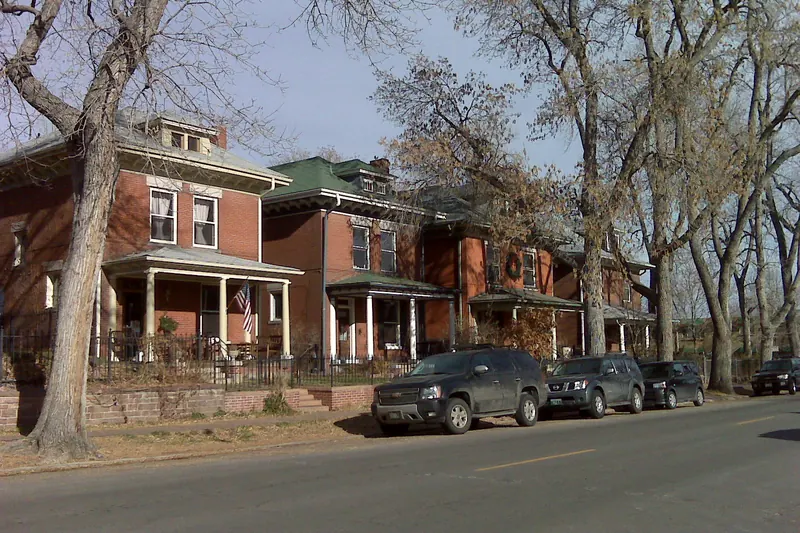
The furnace in a brick foursquare off Colfax quits on a January night, and by morning the question is not only what it will cost but what the city will allow. Somebody on the block has heard that Denver banned gas furnaces. Somebody else has heard the city pays you to switch. Neither is quite right, and the difference matters when a contractor is standing in the basement with two quotes.
Here is the answer, based on the Denver pages we managed to read this year. No Denver rule we found makes the owner of a single-family house install a heat pump when the furnace, the air conditioner or the water heater wears out. The rules that push buildings toward electric heat, including Energize Denver and the electrification requirements tied to permits, apply to commercial and multifamily buildings, and Energize Denver only starts at 5,000 square feet. What a house replacement does need is a permit, an inspection and equipment that meets today's efficiency standards.
A word on how we read the city. Denver's own website refused automated requests when we checked in October 2026, so every Denver page cited here is an archived copy held by the Internet Archive, captured between January 2025 and October 2026. We link those copies so you can see exactly what we saw. Rules change, and the live pages may say something newer, so treat this as a map and confirm the details with the city or your contractor before you sign.
Part 1Is Denver making homeowners switch to a heat pump?
Not through any rule we could find. The program people usually have in mind is Energize Denver, the building performance policy the city passed in November 2021. It applies only to existing buildings, and only in two size bands: 5,000 to 24,999 square feet, and 25,000 square feet and larger. A typical Denver bungalow, ranch or two-story falls well short of either.
Even for the big buildings it covers, the city is blunt about what Energize Denver is not. Its own page, in the copy archived in May 2026, says: "Energize Denver is NOT: A mandate to electrify building heating or cooling systems."
The city does have a goal, stated on its efficient buildings and homes page: all Denver buildings zero-emissions by 2040. A goal is not a permit condition. Nothing we read turns it into an obligation for a homeowner replacing a furnace this winter.
Part 2Where the electrification rules do apply
The firm requirements sit in the commercial and multifamily world, and they are worth knowing if you own a rental building or sit on a condo board.
The first is the Electrification Feasibility Report. According to the city's EFR page, archived in April 2026, the requirement covers every existing commercial and multifamily building in the city. From 2025, when a gas furnace, a unitary air conditioner or condensing unit, or a gas water heater in one of those buildings is replaced, it must go electric if the report shows a heat pump is cost-effective. Packaged and vertical terminal air conditioners and boilers were scheduled to follow in 2027.
Cost-effective has a precise meaning there. The electric option passes if its net present value is no more than 15% higher than the gas option's, and that calculation includes a social cost of carbon of $79 a ton, rising 2.5% a year from 2022.
The second rule is about permits. From March 1, 2023, the city stopped letting some gas-fired heating and cooling replacements in commercial and multifamily buildings use a quick permit. Emergency replacements of a single failed unit at the same capacity could still use one.
These rules have been moving. The 2025 Denver Energy Code's commercial amendments, archived in December 2025, narrowed the gas-furnace restriction to new buildings only, leaving new equipment in existing buildings out of it. A later city post may have loosened the permit side further, but we could not read it. Treat the commercial picture as unsettled. None of it reaches a single-family house.
If you own a condo or townhome inside a larger building, ask the HOA or building manager how these rules apply to the building's equipment. We did not find a city page that answers that unit by unit.
Part 3What a house replacement still needs
A single-family house or duplex in Denver replaces its furnace, air conditioner, evaporative cooler or water heater under a quick permit. The city's quick-permit page, in the copy archived in March 2025, lists residential A/C compressor units, ductwork, evaporative cooling units, forced-air heating and water heaters. There is no plan review, but the work is still inspected, and the inspector checks that the replacement meets current energy-code efficiency.
For a heat pump or central air conditioner, the federal floor sets that efficiency. Colorado sits outside both regions with stricter standards, so the national numbers rule here: at least 13.4 SEER2 for a split-system air conditioner, and for a split-system heat pump at least 7.5 HSPF2 with 14.3 SEER2.
The residential energy code itself has not changed much. The city describes the 2025 Denver Energy Code for homes as substantially the same as the 2022 version, built on the 2021 IECC, and says existing homes being altered must follow the relevant parts of it. The detailed page on the 2025 residential amendments was not readable in any form, so sizing and duct rules for replacements are something to ask your contractor about directly.
Who pulls the permit matters too. Usually it is a Denver-licensed contractor. A homeowner can pull one only for an owner-occupied single-family house, not a duplex, townhome, condo or accessory dwelling, and only after passing a free city exam for mechanical work. The owner has to stay in the home a full year once the job is done, and houses held by an LLC or a trust are excluded. Our piece on permits and inspections walks through the process step by step.
Replacing a fuel-fired appliance under a permit also brings in Colorado's carbon monoxide alarm law: an alarm within 15 feet of every bedroom door, or wherever the local code puts it. The details are in carbon monoxide, gas furnaces and the alarm law.
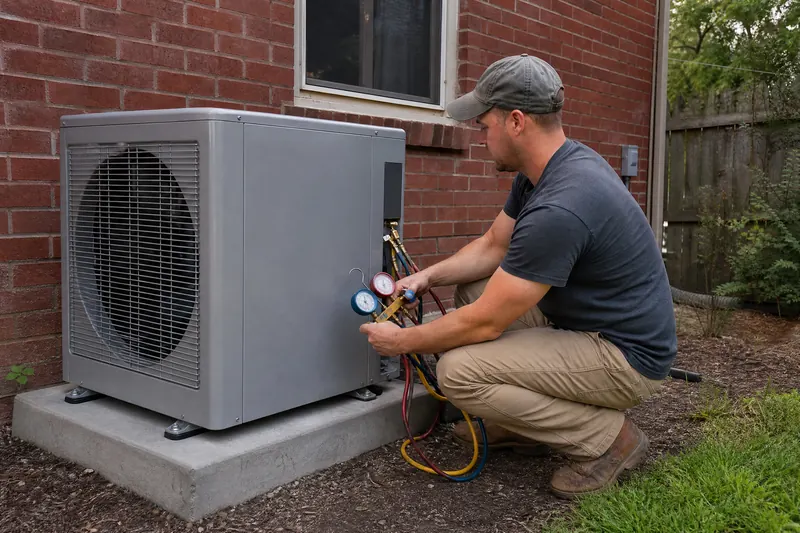
Part 4A gas furnace is still allowed. The money leans electric.
So the owner of that foursquare can put in a new gas furnace. Nothing we read stops it, provided it is permitted, inspected and efficient enough. The pressure comes from the incentives instead.
Xcel Energy removes its gas furnace and boiler rebates on Jan. 1, 2027, while its heat pump rebates run to $1,500 per heating ton for a cold-climate model at the bonus rate in 2026. The state's heat pump tax credit, claimed by a registered contractor, puts at least $333 of a $1,000 air-source credit on your invoice. And the regional Power Ahead Colorado program adds $1,500 per cold-climate heat pump. The full rundown is in Xcel Energy rebates for heating and cooling and what is left of the heat pump tax credits.
The programs also carry their own "requirements," which is where much of the confusion comes from. Colorado's credit only applies to space-heating heat pumps designed to meet at least 80% of a home's annual heating needs. Xcel pays its per-ton mini-split rates only when the equipment heats at least half the house. Those are conditions for the money, not city law, but a contractor may describe them as rules.
Part 5What the city offers homeowners now
Denver once paid heat pump rebates to commercial and multifamily building owners. That program is listed under the city's closed programs. The current rebates page, archived in October 2026, lists programs for building owners: design and implementation grants, an audit rebate, an affordable-housing pilot and an Energize Denver gap fund. It lists no cash heat pump rebate for homeowners.
What homeowners do have is a group buy. The city partnered with Switch Together Denver on group buying for solar and heat pumps, which offers a bulk-purchase discount rather than a city check. The page says mailers went out in April, May and July 2026.
Two neighborhoods have something bigger. The city's neighborhood electrification pilots, run with Xcel in 2026, include a geothermal thermal network for about 25 homes in Ruby Hill and whole-home electrification for up to 100 single-family homes in Valverde. The city says "All upgrades will be provided at no cost to the homeowner." If you live in either neighborhood, that page is the first thing to read.
Part 6Choosing in an older Denver house
The city leaves the choice to you, and the house usually narrows it. A Denver square heated by an old boiler and cast-iron radiators has no ducts for a central heat pump. Its options are an air-to-water heat pump that can feed the radiators, ductless heads room by room, or a new boiler. A 1950s ranch with a basement furnace and a rooftop swamp cooler has ducts, though whether they suit a heat pump is a question for a proper load calculation.
The more useful question is not "is it required" but "what does this house need on the coldest mornings, and what will it cost to run." That is the subject of our furnace-versus-heat-pump feature and, for houses without ducts, ductless heat pumps for older Denver houses.
Common questions
Can a Denver homeowner replace a gas furnace with another gas furnace?
Yes, based on the city pages we could read in 2026. A single-family replacement needs a quick permit and an inspection, and the new furnace must meet current efficiency standards, but no rule we found requires a heat pump instead.
Does Energize Denver apply to a single-family house?
No. Its two size bands start at 5,000 square feet, which leaves out ordinary houses, and the city's own page says the program does not force anyone to electrify.
Is a permit required when a Denver house goes from furnace to heat pump?
Yes. Furnace, air conditioner, ductwork and evaporative cooler replacements in a house or duplex go through the city's quick permit and are inspected. A Denver-licensed contractor usually pulls it.
Does the City of Denver pay homeowners a heat pump rebate?
Not that we found. The city's commercial and multifamily heat pump rebate is closed, and its rebate page lists building-owner programs. Homeowners can use the Switch Together group buy, the Ruby Hill and Valverde pilots if they qualify, Xcel's rebates and the regional Power Ahead rebate.
Where does the idea that Denver requires heat pumps come from?
From a real rule that covers other buildings. Existing commercial and multifamily buildings face the Electrification Feasibility Report rule, which can require electric replacements when a heat pump is cost-effective. That rule does not apply to single-family houses.
Sources
- City of Denver — Energize Denver Building Performance Policy, archived May 10, 2026 — size bands; not an electrification mandate
- City of Denver — Overview of Codes and Policies, archived June 10, 2026 — November 2021 passage; existing buildings only
- City of Denver — Electrification Feasibility Reports, archived April 20, 2026 — commercial and multifamily scope, 2025 and 2027 dates, 15% test, carbon cost
- City of Denver — Quick Permits, archived March 18, 2025 — residential replacements, efficiency at inspection, March 1, 2023 commercial restriction
- City of Denver — 2025 Denver Energy Code key commercial amendments, archived Dec. 5, 2025 — gas-furnace limit narrowed to new buildings
- City of Denver — Denver Residential Energy Code, archived Feb. 28, 2026 — 2025 code substantially the same as 2022
- City of Denver — Homeowner Permits, archived Jan. 12, 2025 — who may pull a permit, exam, one-year occupancy
- City of Denver — Building rebates, archived Oct. 20, 2026 — current programs for building owners
- City of Denver — Group Buying Programs, archived 2026 — Switch Together heat pump group buy
- City of Denver — Neighborhood Electrification Programs, archived June 9, 2026 — Ruby Hill and Valverde pilots
- govinfo — 10 CFR 430.32 — federal minimum efficiency
- Colorado Energy Office — Heat Pump Tax Credit — 80% heating-load rule and 2026 discount